Ownership & Charter
The Two-Boat Strategy: Operators Pairing Phinisi With Speedboats
5 min read Komodo Boat For Sale desk

In this article
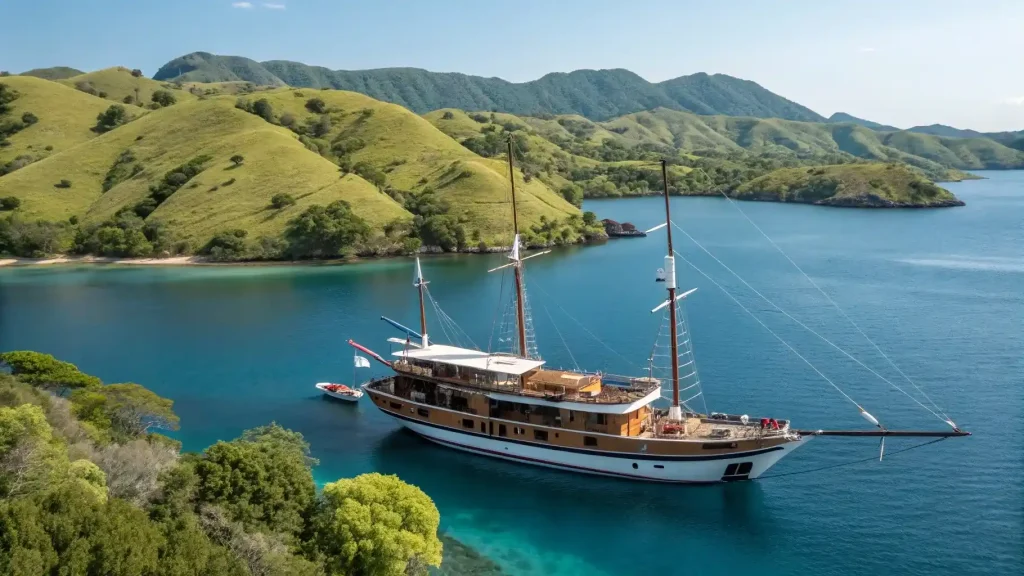
Spend a week watching the Labuan Bajo waterfront and a pattern emerges among the operators who seem to run smoothly: most of them own two very different boats. An overnight phinisi carrying the brand and the margin, and a fast day boat doing the unglamorous work that makes the phinisi profitable. The pairing is not a coincidence, and understanding why it works changes how a buyer thinks about a first purchase.
The four jobs the fast boat does
1. Guest transfers
Moving guests between the airport, town and an anchored liveaboard is a daily requirement. Chartering a transfer boat each time is a recurring cost with no asset behind it, and it puts your guests’ first and last impressions in someone else’s hands. Owning the transfer removes both problems.
2. Logistics
Provisioning, fuel runs, parts, crew changes, laundry, and the occasional emergency shore trip. A phinisi returning to town for a forgotten item burns an enormous amount of fuel and time. A fast boat does the same errand in a fraction of both.
3. Independent day-trip revenue
This is the part buyers underestimate. Day trips to Padar, Pink Beach and Manta Point serve an entirely different market from multi-night charters — travellers on short stays, domestic visitors, guests staying in town hotels. That market runs even when the liveaboard is between charters, and it runs in shoulder months when overnight demand thins.
4. Redundancy
When the phinisi is on the slipway, the day boat keeps revenue flowing and keeps some of the crew employed rather than lost to competitors. When the day boat is down, the phinisi is unaffected. Two independent hulls fail independently.
The economics
The capital argument is straightforward: a competent day boat sits in a modest fraction of a liveaboard’s price, while the transfer and logistics savings alone recover a meaningful share of that outlay over a busy season. Day-trip revenue on top is incremental. What matters more than the precise figures is the shape: the fast boat’s costs are low and its utilisation is high, which is close to the inverse of the liveaboard’s profile.
The strategic argument is stronger still. A single-vessel operator has one revenue line, one failure point and one market segment. A two-boat operator has diversified across all three without diversifying into an unfamiliar business.
The costs people forget
- Crew. The day boat needs its own crew, and skilled boat handlers are not idle in this market. Some operators rotate crew between vessels, which works only if the schedules genuinely do not collide.
- Maintenance attention. Outboards in constant salt service demand disciplined care. A day boat maintained as an afterthought becomes an expensive liability quickly.
- Compliance duplication. Two vessels means two sets of certification, insurance and permissions.
- Management bandwidth. Two boats generate more than twice the coordination of one, which is why some owners place technical and commercial oversight with a professional
vessel management desk at Komodo Luxury rather than absorbing it personally.
Sequencing: which boat first?
The prevailing wisdom is phinisi first, day boat second, and for most buyers that is right — the overnight vessel carries the brand and the margin, and the day boat’s savings only materialise once there is a liveaboard to service.
The contrary case is real though. A day boat is a far lower-cost way to learn this market: lower capital, simpler operation, faster feedback on demand, and a working relationship with the harbour, the agents and the crew pool built before you commit to a much larger asset. Buyers new to Indonesia frequently do better starting small and moving up in eighteen months than committing everything to a first purchase they are not yet equipped to evaluate.
Matching the pair
The two vessels should be specified together rather than acquired independently:
- Passenger capacity. The day boat should carry the phinisi’s full guest complement plus luggage in one run. Two trips per transfer destroys the time advantage.
- Range and sea-keeping. It must reach the phinisi’s usual anchorages comfortably in the conditions you actually operate in, not just on calm days.
- Boarding compatibility. Freeboard and boarding arrangements must work safely against the phinisi’s boarding platform in a swell, with guests carrying bags.
- Independent commercial appeal. Shade, seating, a head and a usable swim ladder so it can sell day trips in its own right rather than only serving the mothership.
The three-boat question
Operators who make two work often consider a third. The economics change at that point: three hulls justify a dedicated shore team, a spares inventory and standardised systems, which is a genuinely different business from owner-operating two boats. It is a good business, but it is a decision about building a company rather than buying an asset, and it should be made deliberately.
Related reading
- Financing a Komodo Purchase Through Charter Forward-Bookings
- Transferring a Mooring With the Boat: How Labuan Bajo Deals Include Position
- Phinisi Charter Income — A Boat as a Komodo Investment
Frequently asked questions
What size day boat pairs best with a phinisi?
One that carries the liveaboard’s full guest complement plus luggage in a single run — commonly an eighteen to twenty-five passenger boat for a six to nine cabin phinisi. Capacity below that forces double trips and removes the main advantage.
Can one crew run both vessels?
Partially, and only with careful scheduling. The day boat needs a dedicated skipper during operating hours. Sharing crew works for logistics runs and slack periods, not for simultaneous commercial operation.
Is the day boat worth owning if I only do transfers?
Usually yes, on transfer savings and control of the guest experience alone. The day-trip revenue then makes it comfortably positive rather than merely justified.
Should both boats sit in the same company?
That depends on your liability and tax position and is a question for your advisers. Many operators separate them; many do not. Decide before the second purchase rather than restructuring afterwards.
Komodo Boat For Sale is a specialist maritime brand and digital platform under Juara Holding Group. Vessel-sale, construction and refit contracts are issued by PT Komodo Galangan Nusantara; brokerage and charter representation by PT Komodo Bahari Nusantara; boat management by PT Komodo Vessel Management.
Talk to the desk
If you are weighing a specific vessel, send us the listing and the month you want to be operating. WhatsApp +62 811 3941 4563 or email [email protected]. Figures are quoted in USD.