
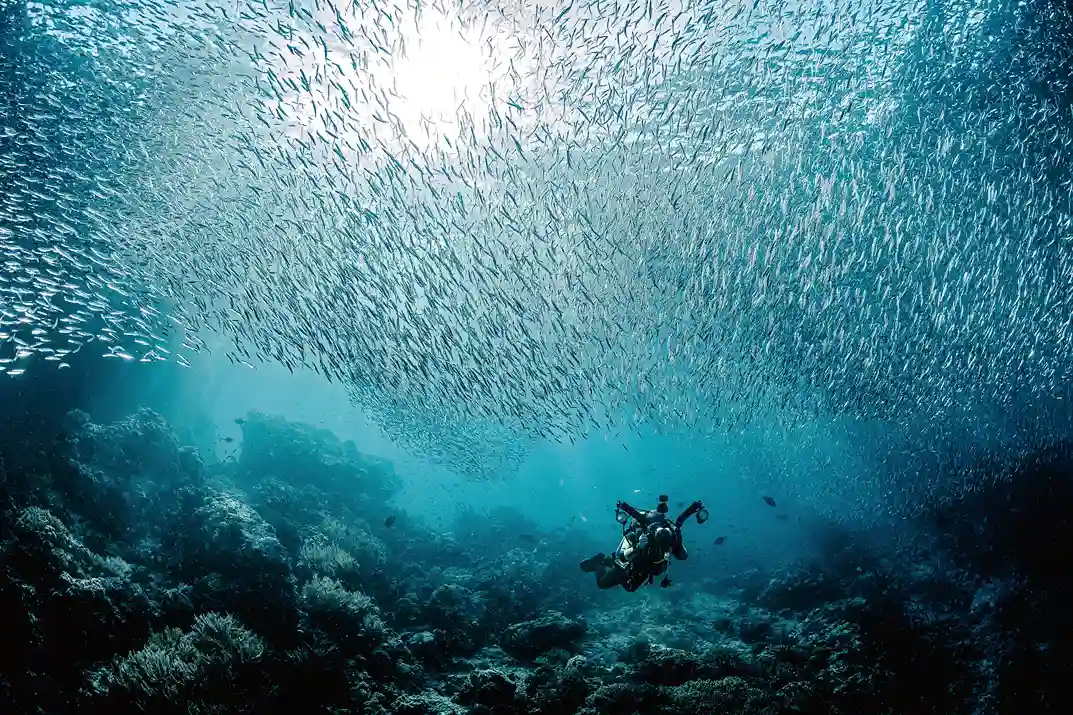
Compressor-ready vessels
Komodo Dive Boats
Dive boats judged on air supply, tenders and holding station in current — not cabin finish. From day dive boats to established nitrox liveaboards.
In short
A Komodo dive boat is judged first on air supply, tenders and holding station in some of Indonesia's strongest tidal flow. A vessel that cannot put divers precisely on a site and recover them downstream is not a dive boat, however many tanks it carries.
Dive boats at a glance
- Divers carried, by class
- 8–24
- Systems that decide the price
- 5
- Dives a day, worst-case sizing
- 4
- USD, indicative entry price
- 70k+
Figures indicative, confirmed per vessel.
What sets the price
A genuine dive platform is more than a liveaboard with a compressor bolted to the aft deck. Survey these on top of hull and machinery.
The five systems
- Compressor bank, with redundancy
- Nitrox capability, installed and certified
- Fixed tank racks and rigging stations
- Powered tenders that can chase a drifting group
- Freshwater production for rinse tanks and showers
Dive-specific survey
- Air quality tested at the compressor output
- Compressor service records and hours
- Tender engine hours and hull condition
- Emergency oxygen and evacuation planning
Indicative prices
Priced by divers carried
Compressors, nitrox, tank storage, tenders and freshwater decide where a boat sits in its band. A boat without compressor redundancy should be priced accordingly.
Komodo liveaboard bands- Day dive boat, single compressor 8–14 divers
- USD 70k–220k
- Small dive liveaboard 10–16 divers
- USD 350k–800k
- Established dive liveaboard, nitrox 14–20 divers
- USD 800k–2M
- Premium dive vessel, twin tenders 16–24 divers
- USD 1.8M–3.5M
All figures indicative, confirmed on enquiry.
Sites it must work

Test it on the real itinerary
Trial the boat against the sites it will actually sell. A vessel that handles the north comfortably will generally handle the rest.
-
01
Batu Bolong & Castle Rock
In the north, current sets a tight drop window; the tender must recover divers well downstream.
-
02
Manta Point & Karang Makassar
Shallow-water manoeuvring around surfacing groups.
-
03
Southern sites
Swell exposure and colder water change what guests expect for comfort.
Business or hull

Buying an operating dive business
Some dive boats come with an operating history, a divemaster team and repeat agent relationships. That package is worth more than the hull alone, and it needs its own diligence.
- Diligence Staff contracts, instructor certifications, agency affiliations, and whether reviews follow the boat or the brand.
- Hull only Budget a full season to build booking volume, and price the purchase on that basis.
- New build No compressor-ready boat in your band? Commission one in South Sulawesi with the dive deck designed in.
Buying a dive boat
Can a general liveaboard be converted into a dive boat?
Often, yes. Budget for compressors and power, tank racks, a dive platform and ladder for current exits, rinse tanks and a better tender. Deck space and generator headroom decide whether it makes sense.
How much compressor capacity is enough?
Size for the worst case: maximum divers, four dives a day, twin tanks for technical guests — while the boat also makes water and runs hotel load. Otherwise it bottlenecks in high season.
Does the vessel need its own instructors?
Not necessarily; many owners use a contracted dive team or a partner operator. If the price includes an operating business, the staff and their certifications are part of the purchase.
What is the biggest hidden cost after purchase?
Tender replacement. Buyers budget for the main engine, then find the tenders are at the end of their working life. Inspect them as seriously as the main machinery.

More on Boats for Sale
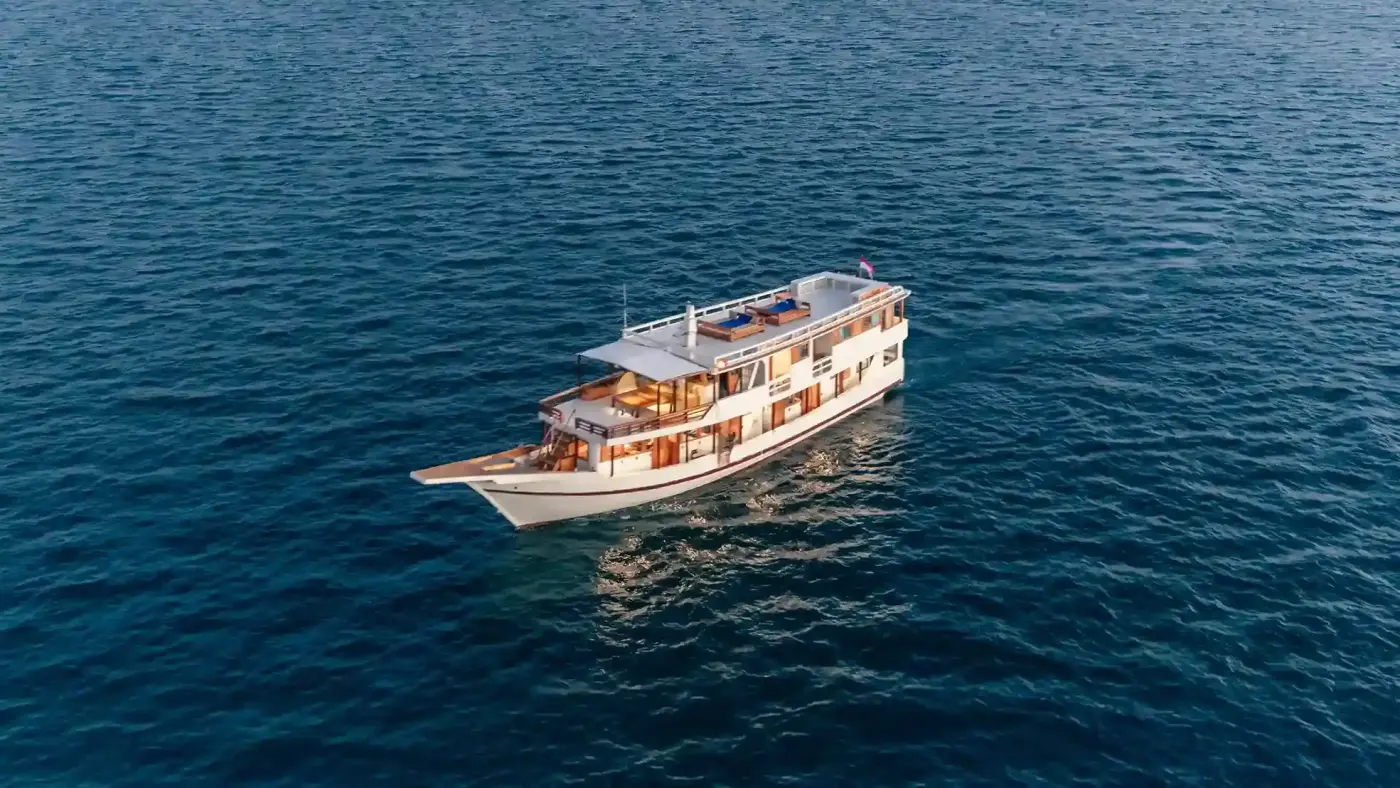
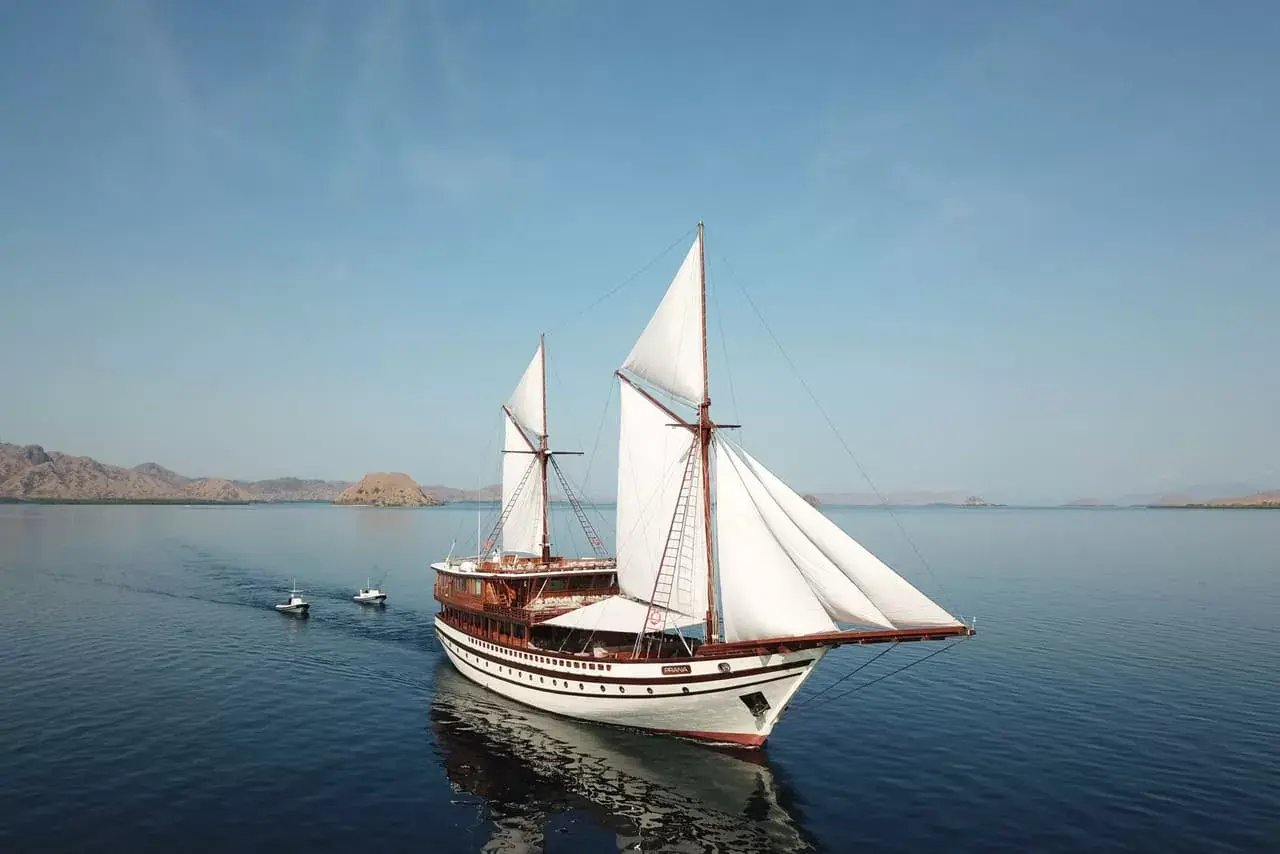
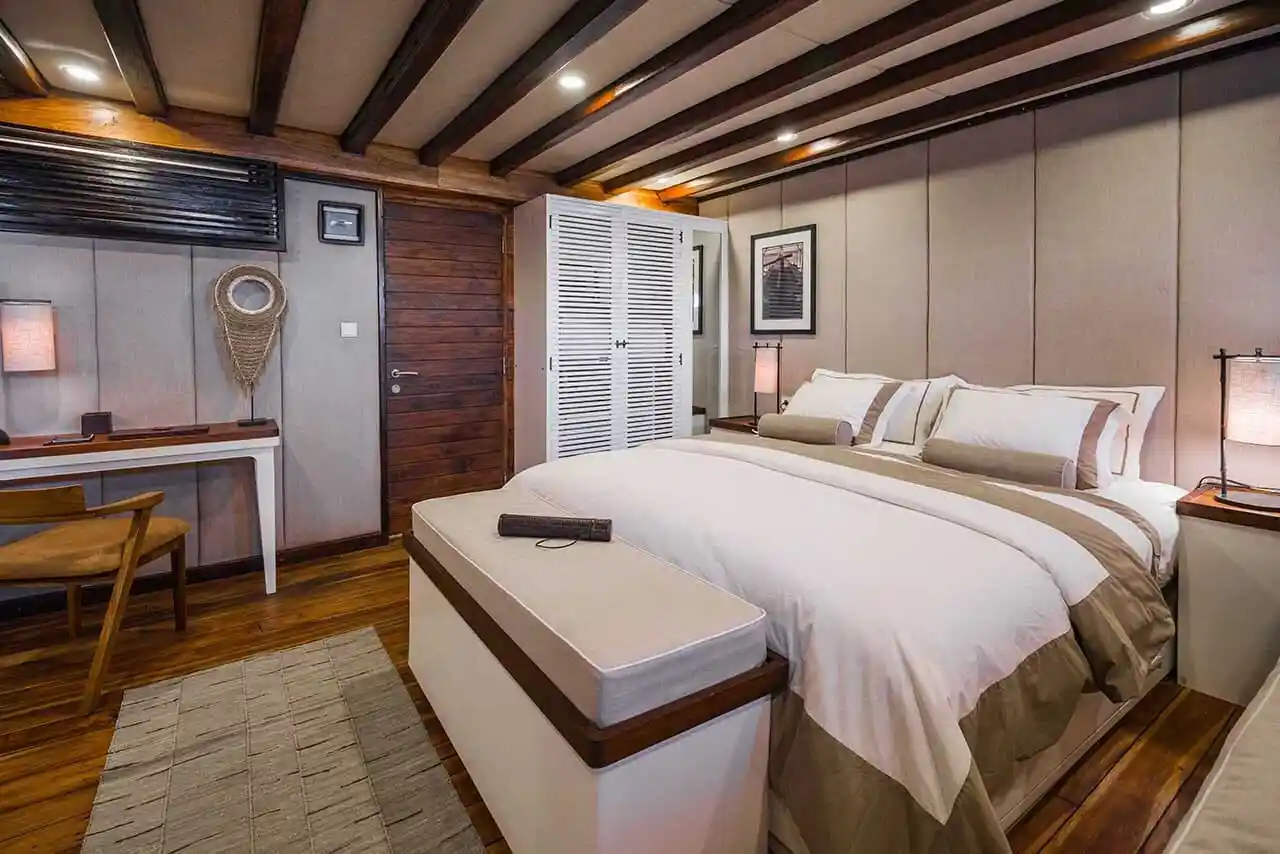


Looking for a dive boat in Komodo?
Tell us the diver count, budget band and the month you want to operate. If nothing fits, we can scope a new build.