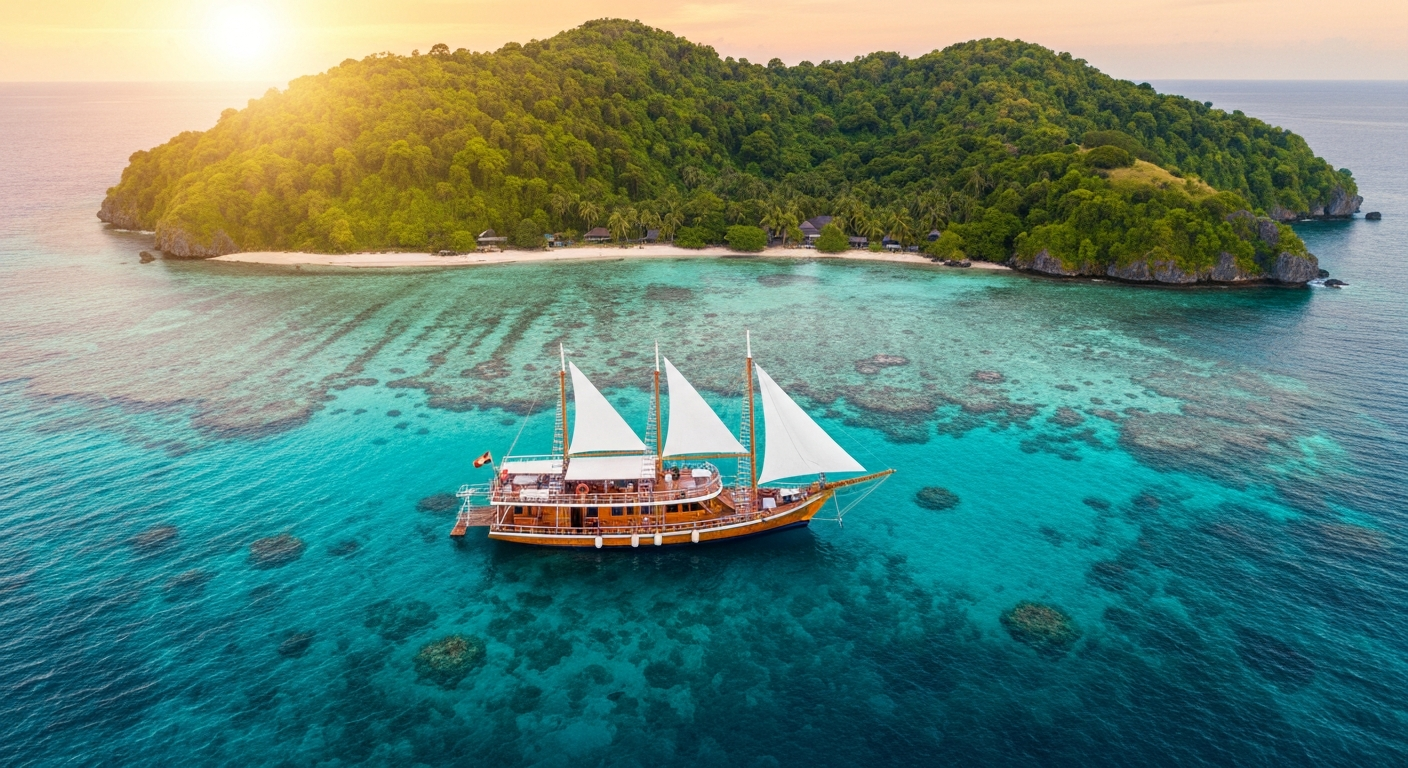
Komodo National Park, a UNESCO World Heritage Site since 1991, offers unparalleled photographic opportunities for visitors. Documenting the unique biodiversity and dramatic landscapes requires specific gear and preparation, especially when operating from a vessel. The park spans 1,733 square kilometers, encompassing three major islands—Komodo, Rinca, and Padar—along with numerous smaller islets [UNESCO World Heritage Centre](https://whc.unesco.org/en/list/609/). Successful photography within this protected marine and terrestrial environment relies heavily on understanding local conditions and equipment compatibility. Many visitors arrive in Labuan Bajo, the primary gateway, primarily via boat to explore the region’s distinct ecosystems. Careful planning ensures photographers capture the essence of this Indonesian archipelago, from its iconic Komodo dragons to its vibrant coral reefs. Marine photography demands robust, waterproof equipment capable of withstanding saltwater exposure and variable light conditions.
Essential Photography Gear for Komodo Expeditions
Selecting appropriate photography gear is critical for any Komodo expedition, given the diverse environments encountered. Most trips involve extensive boat travel, often on traditional phinisi vessels or modern speedboats, influencing equipment choices. A versatile camera system, capable of both terrestrial and underwater capture, proves most effective. For instance, a mirrorless camera with interchangeable lenses offers flexibility for wildlife and landscape shots, while specialized underwater cameras handle marine subjects. Batteries and storage are paramount; a typical 3-day/2-night liveaboard trip requires at least three spare camera batteries and 256GB of high-speed memory card capacity. Protecting equipment from moisture and impact during transfers between boats and shore is a constant consideration.
Underwater Camera Systems
Underwater photography in Komodo demands specialized equipment due to depths and marine life. Compact waterproof cameras, rated to 15-20 meters, suit snorkelers and casual divers. These devices often feature 12-20 megapixel sensors and capture 4K video at 30 frames per second. For serious underwater photographers, a full-frame mirrorless or DSLR camera housed in a dedicated waterproof casing is essential. These housings typically withstand depths of 60-100 meters and integrate external strobes or video lights. Komodo’s water visibility frequently exceeds 25 meters during the dry season, providing excellent conditions for wide-angle and macro photography of over 1,000 fish species and 260 coral species [indonesia.travel](https://www.indonesia.travel/gb/en/destinations/bali-nusa-tenggara/labuan-bajo/komodo-national-park). Proper maintenance, including fresh water rinses after each use, prevents saltwater corrosion.
Drone Photography for Aerial Views
Drones offer a unique perspective of Komodo’s dramatic islands and turquoise waters, capturing sweeping aerial vistas. Modern consumer drones, such as those weighing under 250 grams, often do not require specific registration in Indonesia for recreational use, though local restrictions apply in protected areas. Drones equipped with 4K cameras and flight times of 25-30 minutes are standard. Operators must adhere to local regulations, avoiding flight over Komodo dragon habitats and respecting privacy. Launching and landing from a moving boat requires skill and calm conditions. A reliable GPS signal is crucial for safe operation, especially when navigating around the volcanic islands and rugged coastlines. Always carry spare batteries; a 3-battery kit provides approximately 75-90 minutes of total flight time.
DSLR and Mirrorless Cameras for Terrestrial Wildlife
For capturing Komodo’s terrestrial attractions, including the iconic Komodo dragons, DSLR or mirrorless cameras with telephoto lenses are indispensable. A lens range of 70-200mm or 100-400mm allows photographers to maintain a safe distance from wildlife while achieving detailed shots. These cameras typically feature 24-45 megapixel sensors, offering high resolution for large prints and cropping flexibility. Fast autofocus systems are beneficial for capturing moving subjects like monitor lizards or diverse birdlife. Carrying multiple lenses, including a wide-angle for landscapes, provides comprehensive coverage. Protecting these delicate electronics from dust, heat, and humidity is important, especially during treks on Rinca or Komodo Island. A dry bag or pelican case offers superior protection against environmental elements.
Protecting Your Gear on Komodo Boats
Boat travel in Komodo exposes photography gear to various risks, including saltwater spray, humidity, and accidental drops. Investing in robust protection is not optional. Waterproof dry bags, ranging from 10 to 40 liters in capacity, keep cameras and lenses dry during speedboat transfers or unexpected rain showers. Hard cases, like Pelican cases, offer superior impact protection for sensitive equipment during transit between Labuan Bajo and the park. These cases often feature custom foam inserts, securing individual items and preventing movement. Additionally, silica gel packets placed inside camera bags absorb humidity, preventing fungus growth on lenses, a common issue in tropical climates. Always secure equipment when a boat is underway to prevent items from shifting or falling overboard, especially during rougher sea conditions experienced outside the peak dry season (April-September).
Post-Processing and Archiving Komodo Images
Effective post-processing and archiving ensure the longevity and quality of Komodo photographs. Raw image files, typically 20-50MB each, offer maximum flexibility for color correction and exposure adjustments. Bringing a laptop or portable hard drive, such as a 2TB SSD, allows for daily backups and initial culling of images. Cloud storage services provide an off-site backup, mitigating the risk of data loss from physical damage or theft. Editing software, like Adobe Lightroom or Capture One, helps enhance colors, sharpen details, and remove sensor dust. Consistent file naming conventions and folder structures streamline organization. Archiving involves storing final images on multiple redundant drives or cloud platforms. This safeguards visual records of Komodo’s unique environment and its diverse inhabitants for future reference.
7 Essential Photography Accessories for Komodo Boat Trips
These accessories significantly enhance the photographic experience and protect equipment during Komodo expeditions:
- **Waterproof Dry Bag:** A 20-30 liter capacity bag protects cameras and lenses from splash and rain.
- **Spare Batteries:** Carry at least three for each camera system to support extended shooting days.
- **High-Capacity Memory Cards:** Multiple 128GB or 256GB cards ensure sufficient storage for RAW files and 4K video.
- **Portable Hard Drive:** A 1-2TB rugged SSD facilitates daily backups onboard, preventing data loss.
- **Microfiber Cleaning Cloths:** Essential for removing water spots, dust, and smudges from lenses and screens.
- **Silica Gel Packets:** These prevent humidity-related fungus growth inside camera bodies and lenses.
- **Polarizing Filter:** Reduces glare on water surfaces and enhances sky colors for landscape photography.
- **Small Tripod/GorillaPod:** Useful for stable low-light shots on deck or for creative angles on shore.
- **Underwater Light/Strobe:** Improves color and clarity for underwater subjects, especially in deeper water.
- **Snorkel Mask & Fins:** Allows photographers to scout locations and get closer to marine life for better compositions.
Komodo Boat Brokerage specializes in connecting buyers with vessels suited for exploration and photography. Whether seeking a dayboat for quick excursions or a liveaboard phinisi for multi-day photographic safaris, we offer diverse options. Explore available phinisi yachts for sale to find a platform for your photographic adventures. For those considering shorter trips, review Komodo yacht charter prices for 2026 to plan your next photographic expedition. Detailed information on vessel specifications and safety features is available for all listings, ensuring a reliable base for your equipment. Our Labuan Bajo travel guide provides additional insights for planning your entire trip, including logistics around equipment transport and local services.
Successful photography in Komodo hinges on preparation, appropriate gear selection, and diligent protection of equipment. From capturing the majestic Komodo dragons on land to the intricate marine ecosystems underwater, the region provides a unique canvas. Understanding the environmental challenges and investing in robust, reliable photographic tools ensures that the visual stories of this remarkable destination are preserved. Komodo Boat Brokerage supports these expeditions by offering a range of suitable vessels, providing the essential platform for professional and amateur photographers alike to achieve their creative goals in this challenging yet rewarding environment.