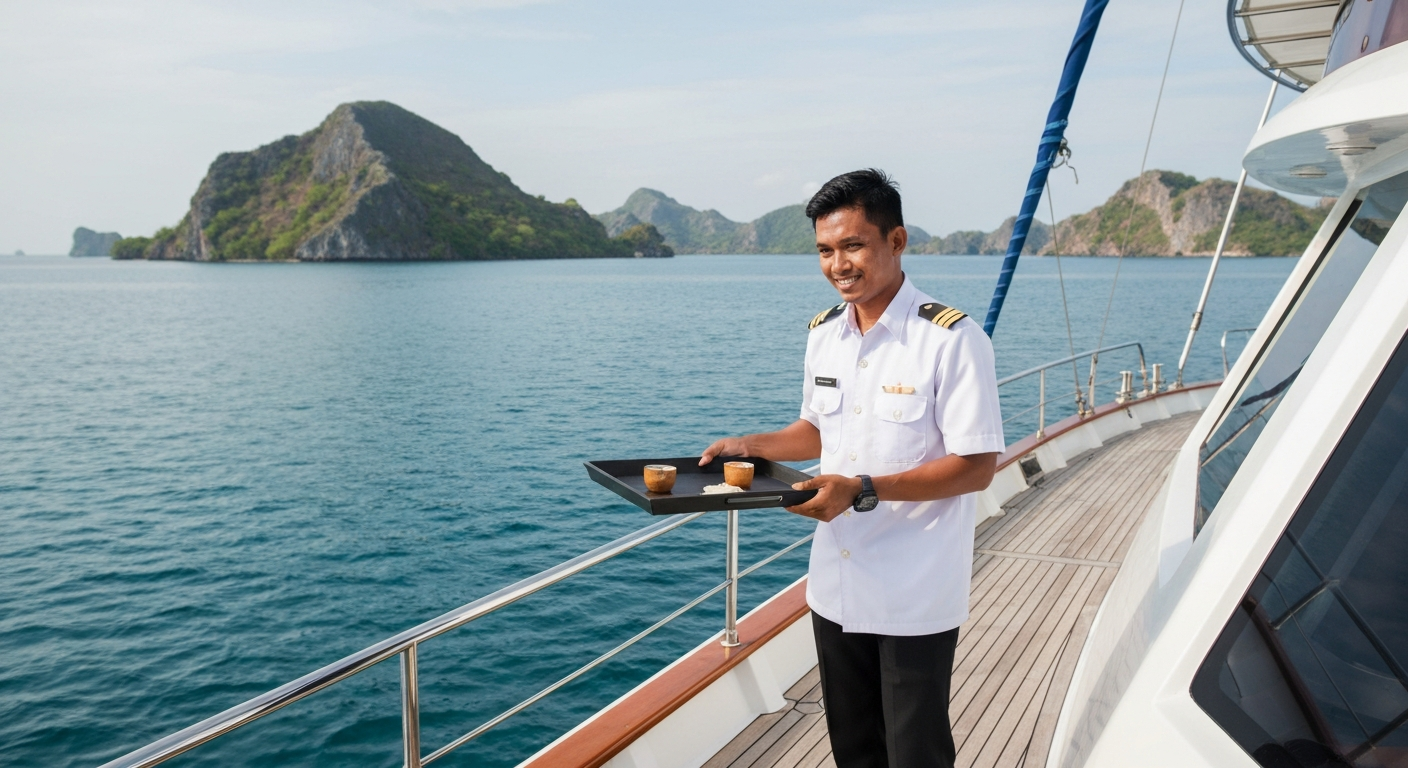
Crew certifications and rigorous safety protocols are fundamental to maritime operations in Komodo National Park. These standards define the operational integrity and reliability of any vessel, a critical consideration for those seeking a Komodo boat for sale. Following several 2024-2025 incidents involving vessel fires and groundings, the Indonesian Ministry of Transportation reinforced safety mandates, leading to heightened scrutiny. Owners and operators now prioritize comprehensive crew training and updated emergency systems to ensure passenger well-being across the archipelago’s diverse waters, which span over 1,733 square kilometers. This focus directly impacts vessel valuation and operational viability for prospective buyers. Indonesia’s Maritime Safety Directives underscore this national priority.
Understanding Indonesian Maritime Safety Standards
Indonesian maritime safety standards govern all commercial vessels operating within the nation’s territorial waters, including the Komodo region. These regulations, primarily issued by the Directorate General of Sea Transportation (Ditjen Hubla) under the Ministry of Transportation, detail requirements for vessel construction, equipment, and crewing. For instance, vessels carrying more than 12 passengers must adhere to specific SOLAS (Safety of Life at Sea) conventions adapted for domestic use, ensuring international benchmarks are met. Regular inspections occur bi-annually, verifying compliance with fire safety systems, navigation equipment, and hull integrity. A certified vessel typically undergoes a full dry-dock inspection every five years, assessing structural components and engine systems thoroughly. These rigorous checks directly influence the market value of a Komodo boat for sale.
Mandatory Crew Certifications for Komodo Vessels
Every crew member on a commercial Komodo vessel requires specific certifications to ensure operational competence and passenger safety. The captain must hold a valid Master 3000 GT (Gross Tonnage) or equivalent certificate, demonstrating proficiency in navigation, maritime law, and emergency procedures. First mates typically possess Officer of the Watch (OOW) certification, capable of assisting in all bridge operations. All crew members, including deckhands and engineers, must complete Basic Safety Training (BST), covering personal survival techniques, fire prevention, elementary first aid, and personal safety and social responsibilities. This training, usually a 5-day course, is mandated by the International Maritime Organization (IMO) STCW (Standards of Training, Certification and Watchkeeping) convention and adopted by Indonesia. For example, a typical 12-passenger phinisi requires at least two certified navigators and three BST-certified deck crew. The STCW Convention provides a comprehensive overview of these global standards.
Advanced Safety Protocols on Modern Phinisis
Modern phinisis operating in Komodo integrate advanced safety protocols beyond basic regulatory requirements. These vessels often feature redundant navigation systems, including multiple GPS units and radar, enhancing situational awareness in the complex currents of the Flores Sea. Fire suppression systems frequently include automated CO2 or FM-200 systems in engine rooms, supplementing traditional extinguishers located throughout the vessel. Passenger manifests are digitally managed, allowing for immediate headcount verification during emergencies, a practice reinforced after 2024 safety reviews. Many operators conduct monthly emergency drills, simulating scenarios such as man overboard or engine failure, involving all 8-12 crew members. The presence of a dedicated medical kit, exceeding basic first aid, and at least one crew member with advanced first aid training, is also becoming standard for premium vessels. These enhanced measures significantly improve the safety profile of a Komodo boat for sale.
Regulatory Compliance and Vessel Registration
Vessel registration in Indonesia involves a multi-stage process, ensuring legal operation and adherence to national maritime laws. Every commercial Komodo boat for sale must possess a valid Surat Ukur (Measurement Certificate), Surat Laut (Sea Letter), and Pas Kecil (Small Craft Pass) for vessels under 7 Gross Tonnage. Larger vessels require a Surat Izin Usaha Angkutan Laut (SIUPAL) from the Ministry of Transportation, demonstrating financial and operational capability. Annual renewal of these documents is mandatory, costing approximately IDR 5-15 million (USD 320-960) depending on vessel size and type. The Komodo National Park Authority also requires specific permits for commercial operations within the park’s 1,733 sq km protected area, often renewed quarterly. These permits ensure adherence to environmental regulations and passenger limits, with fines for non-compliance reaching IDR 50 million (USD 3,200).
The Role of Regular Inspections in Boat Safety
Regular inspections are critical for maintaining safety standards and extending the operational lifespan of vessels in Komodo. Beyond the bi-annual government checks, many reputable operators implement weekly internal safety inspections covering engine performance, bilge systems, and life-saving equipment. Dive boats, for instance, undergo monthly checks on their compressor systems and oxygen tanks, ensuring operational integrity for up to 20 divers. Life rafts, designed to accommodate 150% of the vessel’s maximum capacity, receive annual servicing and certification from approved facilities. Emergency communication systems, including VHF radios and satellite phones, are tested bi-weekly to confirm functionality across the remote Komodo islands, which can be up to 150 kilometers from Labuan Bajo. These diligent inspection routines are a strong indicator of a well-maintained Komodo boat for sale.
Investing in Safety for Komodo Boat Sales
Investing in robust safety features and crew training directly translates into higher value and operational longevity for a Komodo boat for sale. A vessel equipped with modern fire suppression, updated navigation electronics, and a fully certified crew commands a premium in the market, often 15-25% higher than comparable vessels lacking these attributes. Buyers, particularly dive operators or hospitality investors, prioritize vessels with a documented history of safety compliance and minimal incident reports. For example, an older phinisi undergoing a 2025 refit with new engine room fire systems and upgraded life-saving appliances can see its market value increase by USD 50,000 to USD 100,000. This investment mitigates operational risks and ensures smoother permit renewals, attracting discerning foreign buyers from Europe, Australia, and the USA. For options on temporary stays, consider reviewing Komodo yacht charter prices 2026 or exploring Komodo shared vs. private boat options.
Key Safety Equipment Mandated for Komodo Vessels:
- Life Jackets: One approved life jacket for every passenger and crew member, plus 10% extra for children, stored in easily accessible locations.
- Life Rafts: Sufficient capacity to accommodate 150% of the vessel’s maximum passenger count, with current service certificates.
- Fire Extinguishers: Multiple ABC-rated dry chemical extinguishers strategically placed throughout the vessel, with annual service tags.
- Emergency Flares & Signals: A minimum of 6 hand flares, 4 parachute flares, and 2 smoke signals, stored in a waterproof container.
- VHF Radio: At least one fixed VHF radio with DSC (Digital Selective Calling) capability, connected to a dedicated power source.
- First Aid Kit: A comprehensive medical kit, regularly restocked, with specific medications for common maritime injuries and illnesses.
- Navigation Lights: Fully functional port, starboard, stern, and masthead lights, visible for at least 2 nautical miles.
- Anchor & Chain: Sufficient anchor weight and chain length (typically 5-7 times the water depth) for safe mooring in varied conditions.
- Bilge Pumps: Multiple electric and manual bilge pumps with adequate capacity to remove water from all compartments.
- Emergency Steering: A backup steering system or tiller readily available in case of main steering failure.
The operational integrity of any vessel in the Komodo archipelago hinges on robust crew certifications and stringent safety protocols. For those considering a Komodo boat for sale, understanding these foundational elements is paramount to a successful and compliant acquisition. Komodo Boat Brokerage maintains a strict vetting process for all listed vessels, prioritizing those with verifiable safety records, up-to-date certifications, and crews trained to the highest international standards. This commitment ensures every transaction involves a vessel ready for safe and reliable operations. Explore our curated listings of certified Komodo boats for sale, from small dayboats to luxury phinisis, all meeting the rigorous 2026 safety benchmarks.