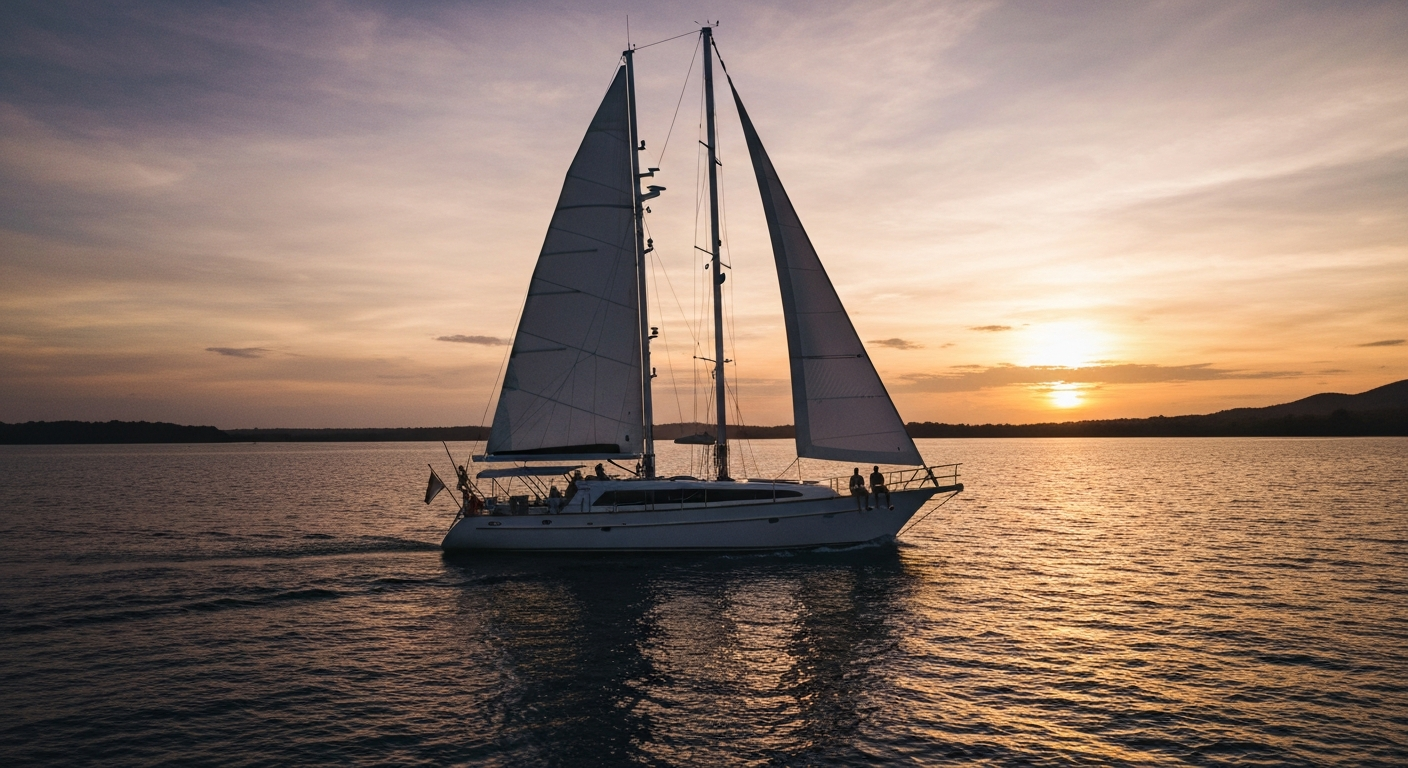
The market for a Komodo boat for sale presents a dynamic investment landscape in 2026, driven by sustained tourism growth and evolving operational demands. Demand for vessels suitable for liveaboard conversions or immediate commercial charter remains high, particularly around Labuan Bajo, the gateway to Komodo National Park. According to Indonesia’s Ministry of Tourism and Creative Economy’s 2025-2026 projections, foreign tourist arrivals to the Komodo region are expected to increase by 15-20% annually, fueling the need for well-maintained and compliant vessels. This growth trajectory directly impacts the valuation and operational viability of boats in this unique maritime ecosystem.
The Komodo Boat Market in 2026: An Investment Overview
The Komodo boat market in 2026 is characterized by its dual nature: serving both private buyers and commercial operators. Labuan Bajo, on Flores Island, serves as the primary hub for all maritime activities in the region. Buyers interested in a Komodo tourist boat often seek vessels that can be adapted for multi-day liveaboard tours, catering to the burgeoning demand from international visitors. Current market analysis indicates that roughly 60% of vessel sales in the area are for commercial purposes, either as new charter operations or fleet expansions. This focus on commercial utility heavily influences available inventory and pricing structures.
Understanding the local regulatory environment is critical for any acquisition. All commercial boats must comply with Indonesian maritime safety standards and possess appropriate operational permits from the local harbor master and national park authorities. As of May 2026, new regulations emphasize environmental compliance and passenger safety, necessitating upgrades for some older vessels. Buyers should budget for potential modifications to meet these evolving standards, which can add 10-20% to the initial purchase price.
Understanding Phinisi and Liveaboard Vessel Costs
The traditional Indonesian phinisi remains a highly sought-after vessel type for those considering a Komodo boat for sale. These wooden schooners range significantly in price depending on age, condition, and luxury outfitting. A used phinisi Komodo boat for sale in Indonesia, suitable for conversion to a basic liveaboard, might start from USD 150,000 for a 20-meter vessel requiring significant refurbishment. Conversely, a fully equipped, modern phinisi yacht for sale in Labuan Bajo Komodo, built within the last five years with ensuite cabins and a robust engine, can command prices upwards of USD 800,000 to USD 2.5 million.
For buyers asking “how much does a Komodo liveaboard boat cost to buy,” the answer depends heavily on the desired operational segment. A smaller, pre-owned vessel (15-18 meters) suitable for shared tours might be acquired for USD 75,000 to USD 150,000. These boats often require an additional USD 30,000 to USD 70,000 for basic amenities, safety equipment, and necessary permits to operate commercially. New builds, especially those designed for high-end luxury charters, can exceed USD 3 million, reflecting custom craftsmanship and advanced navigation systems.
Operational Expenses: Beyond the Purchase Price
Acquiring a Komodo boat is only the initial investment; operational expenses represent a significant ongoing cost. These expenses directly impact profitability for commercial operators and the overall cost of ownership for private yachts. Understanding these figures is crucial for a realistic financial projection. Annual operational budgets for a mid-range 25-meter liveaboard can easily range from USD 100,000 to USD 300,000. This includes essential services, maintenance, and regulatory compliance.
Fuel costs fluctuate but remain a primary expenditure, especially with extensive cruising in the Komodo National Park area. Crew salaries, covering a captain, engineer, chef, and deckhands, represent another substantial fixed cost. Regular dry-docking for hull maintenance and engine overhauls is mandatory, typically occurring every 12-24 months. These intervals ensure the vessel remains seaworthy and compliant with Indonesian maritime regulations, which are enforced by agencies like the Directorate General of Sea Transportation (dephub.go.id).
Key operational expenses for a Komodo liveaboard boat include:
- **Crew Salaries:** USD 2,000 – USD 5,000 per month (for a typical 5-7 person crew).
- **Fuel:** USD 1,500 – USD 4,000 per month, depending on usage and route.
- **Provisioning (Food & Beverages):** USD 1,000 – USD 3,000 per month, fluctuating with guest numbers and luxury level.
- **Maintenance & Repairs:** Annual budget of USD 10,000 – USD 50,000, covering routine service, parts, and unexpected issues.
- **Insurance:** USD 5,000 – USD 15,000 per year for comprehensive hull and liability coverage.
- **Port & Mooring Fees:** USD 300 – USD 800 per month in Labuan Bajo.
- **National Park Fees & Permits:** USD 500 – USD 1,500 per month, depending on guest volume and park regulations for commercial vessels. More details on park entry can be found on the UNESCO World Heritage Centre site for Komodo National Park.
- **Guest Amenities & Supplies:** USD 200 – USD 500 per month for snorkeling gear, towels, toiletries, etc.
Charter vs. Buying: A Strategic Comparison for 2026
For investors evaluating a Komodo boat for sale, the decision between chartering and buying a boat in 2026 involves distinct financial and operational considerations. Chartering offers flexibility and avoids capital outlay, with Komodo private boat hire from Labuan Bajo for 3D2N trips ranging from USD 1,000 to USD 5,000 for mid-range vessels, and shared boat tours costing USD 200-350 per person. Full luxury yacht charters in Komodo can command USD 15,000 to USD 45,000 per trip for 3-7 nights, appealing to High-Net-Worth Individuals (HNWI).
Purchasing a vessel, however, represents a long-term asset and offers potential for significant returns through commercial operation. A well-managed liveaboard targeting the mid-range couples segment (USD 450-900 per person for 3D2N) can generate substantial revenue. With a typical 70-80% occupancy rate during peak season (June-September), a 10-guest boat could generate USD 15,000-30,000 per month in gross revenue. This revenue stream must then cover the operational costs detailed previously, but offers equity growth and operational control. The Komodo liveaboard cost per person in 2026 varies widely, presenting opportunities across all budget segments.
Financing Your Komodo Vessel Acquisition
Financing a Komodo vessel acquisition requires understanding both local and international options. Indonesian banks may offer loans for commercial vessels, often requiring a substantial down payment, typically 30-40% of the vessel’s value. Interest rates and loan terms vary but are generally competitive for established operators. For foreign buyers, securing financing often involves international maritime lenders or leveraging assets in their home country. Brokerage firms like Komodo Boat Brokerage can assist in navigating these financial pathways.
Due diligence is paramount when considering financing. This includes a thorough vessel survey, legal checks on ownership documentation, and verification of all permits. A typical financing period for a commercial vessel might span 5-10 years, impacting monthly cash flow. Buyers should also consider additional costs like legal fees, transfer taxes, and registration fees, which can add 2-5% to the total purchase price. Comprehensive information on investing in Indonesian tourism can be found at indonesia.travel.
Regulatory Landscape and Commercial Operation Permits
Operating a commercial boat in Komodo necessitates adherence to a strict regulatory framework enforced by Indonesian authorities. This includes obtaining a Surat Izin Usaha Pelayaran (SIUP) or Shipping Business License, a Surat Keterangan Laik Laut (SKL) or Seaworthiness Certificate, and various permits from the Komodo National Park authority. The process can be complex, often requiring local expertise. As of 2026, increased scrutiny on environmental impact and safety protocols means that older vessels may need significant upgrades to secure or renew these critical licenses.
Furthermore, all crew members must hold valid certifications, including seaman’s books and relevant competency certificates. Foreign ownership structures for commercial vessels are subject to specific investment regulations, often requiring a local partner or the establishment of a Penanaman Modal Asing (PMA) company. This framework ensures compliance with Indonesian law and supports local employment. Consulting with legal experts specializing in Indonesian maritime law is essential to navigate these requirements successfully and ensure a smooth operational setup.
Understanding the full scope of costs and regulations is paramount when considering a Komodo boat acquisition. Whether you are looking for a Komodo boat for sale to convert into a liveaboard or to expand an existing charter fleet, comprehensive market knowledge and expert guidance are invaluable. Komodo Boat Brokerage offers detailed market insights and facilitates connections with vetted sellers and essential service providers. Contact us today to discuss your specific investment goals and explore the current listings for vessels in the Komodo region.